
Observe.
Wildlife journaling is watching an animal in the field and getting something down. It may be a few marks and words – while it is still happening.
What do you notice about this redwing blackbird? If you let it play, it will loop several times.
How does does the bird move? What do you think about its call and the fluttering of wings?
Play and pause. You can also scroll back and forth. Is there a pose that might capture its singing and fluttering of wings?
How would you record her call?
How does she move as she makes her call?
What do you think she’s doing by making this call?
She starts out as a little round shape, but stretches out by extending her neck as she makes a chit-chit-chit-chit-chit- wow call. The call happens fast, but you can jot down its call as dots and lines.
This blackbird also rotates her head in an arc as she sings. She’s letting other blackbirds in the area know of her presence and likely defending a nest.
Merganser Mom
Do you notice anything else interesting about these birds?
• Why do you think there was a rush of ducklings.
• Why did some ducklings climb up on the mother’s back?
Perfect Landing for an Osprey
Why?
Why does the osprey flap so many times before it lands?
Many birds make one flap and they’re down.
Ospreys are precision flyers and their landing is no exception. Because their nest can be quite small if they’re in their first year as a pair, they need to land carefully so that they do not disturb the nest or the eggs or nestlings after they hatch. An osprey’s wingspan can be as wide as 5-6 feet!
What moment would you choose to sketch or paint this bird?
Do you notice anything else interesting about this bird?
• Why might it wiggle before it lands?
• Is this movement like a hover? Do ospreys hover?
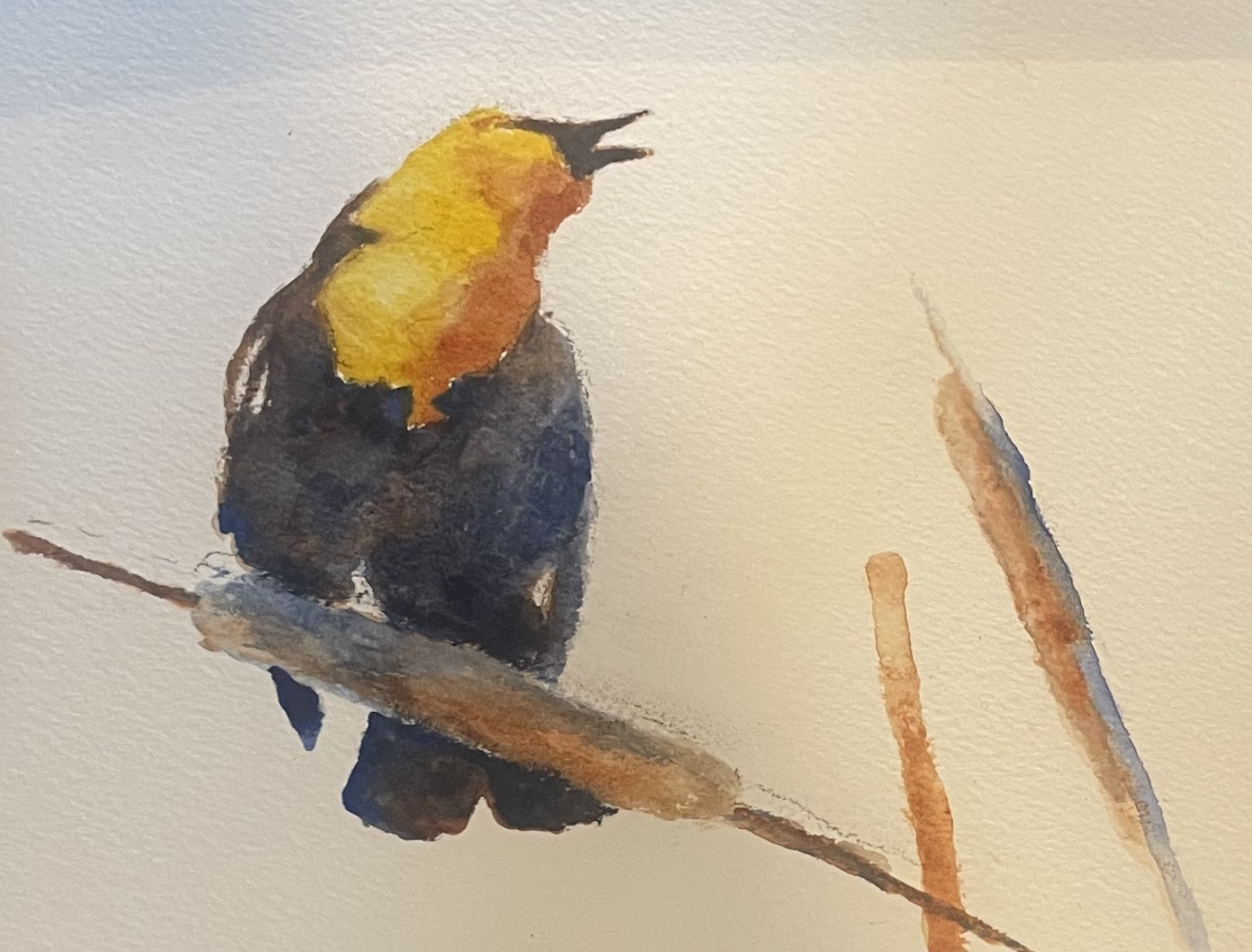
The Raspy Song of the Yellow-Headed Blackbird
Why?
Why does the yellow-headed blackbird have such a strange call? Some describe it as a rusty gate or the sound of grating metal.
These birds, which are cousins of red-winged blackbirds, contort their bodies and twist their throats to produce their strange buzzy call that attracts females and warns off potential rivals.
What else do you notice about this bird?
Territory Warning or Family Lecture?
What’s Going On?
At a rest stop, I looked up at a distant tree and saw a large bird. Because of its white tail and its size, I thought it might be a bald eagle.
What do you think might be going on?
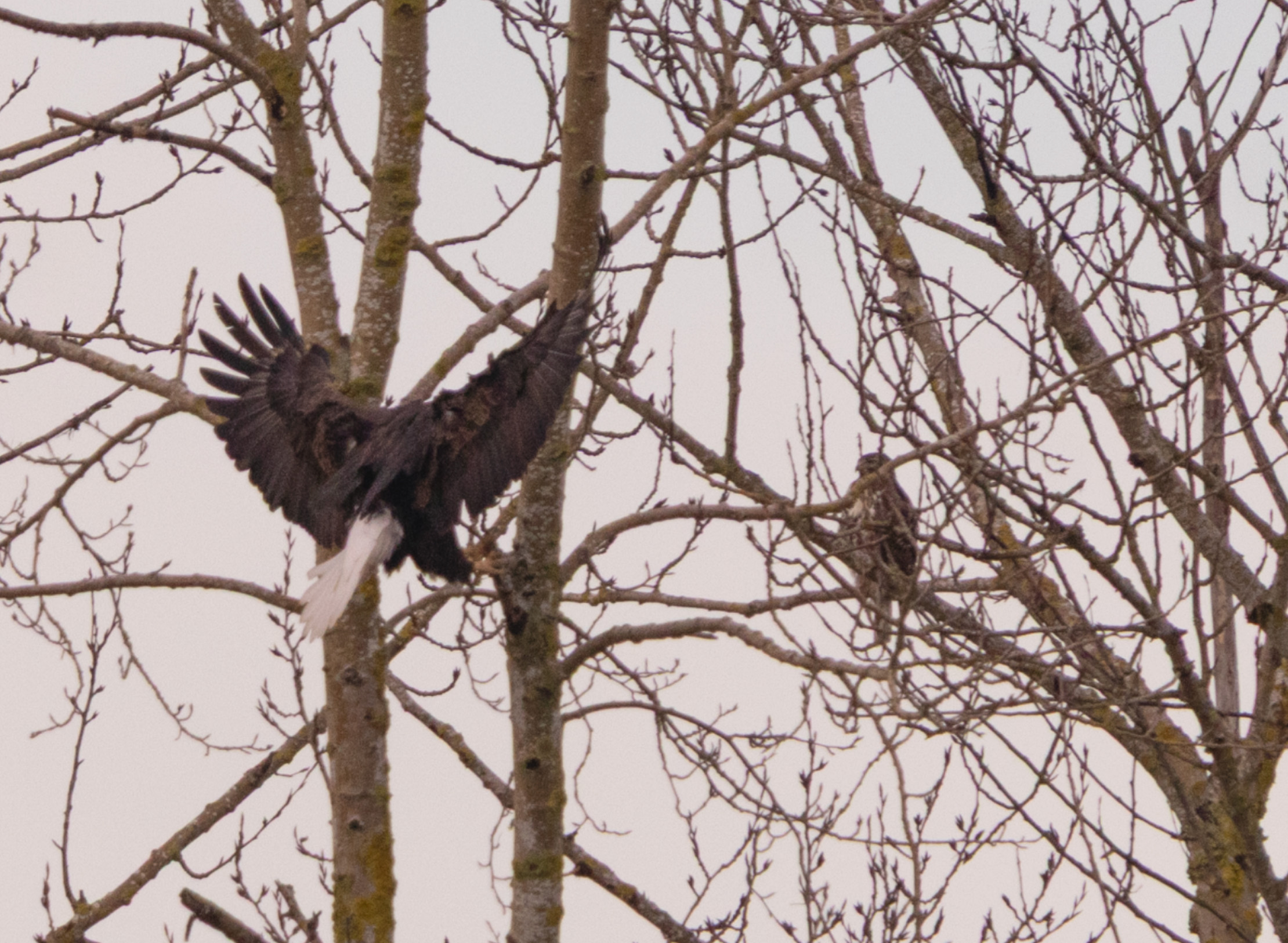
BEFORE
Fortunately, I had taken a photo before this eagle had landed in the tree. What I found was that there was another eagle higher up near the top of the tree.
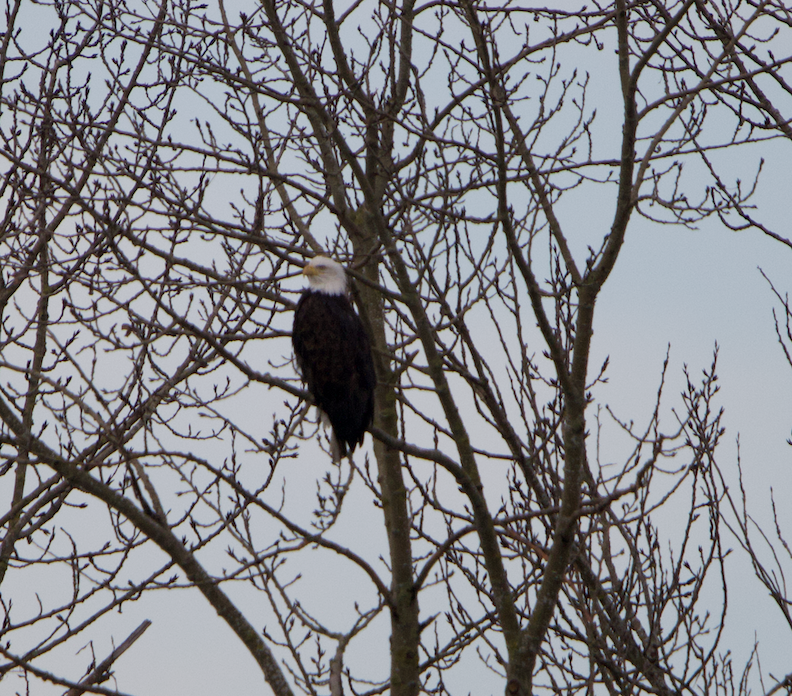
WHAT HAPPENED NEXT?
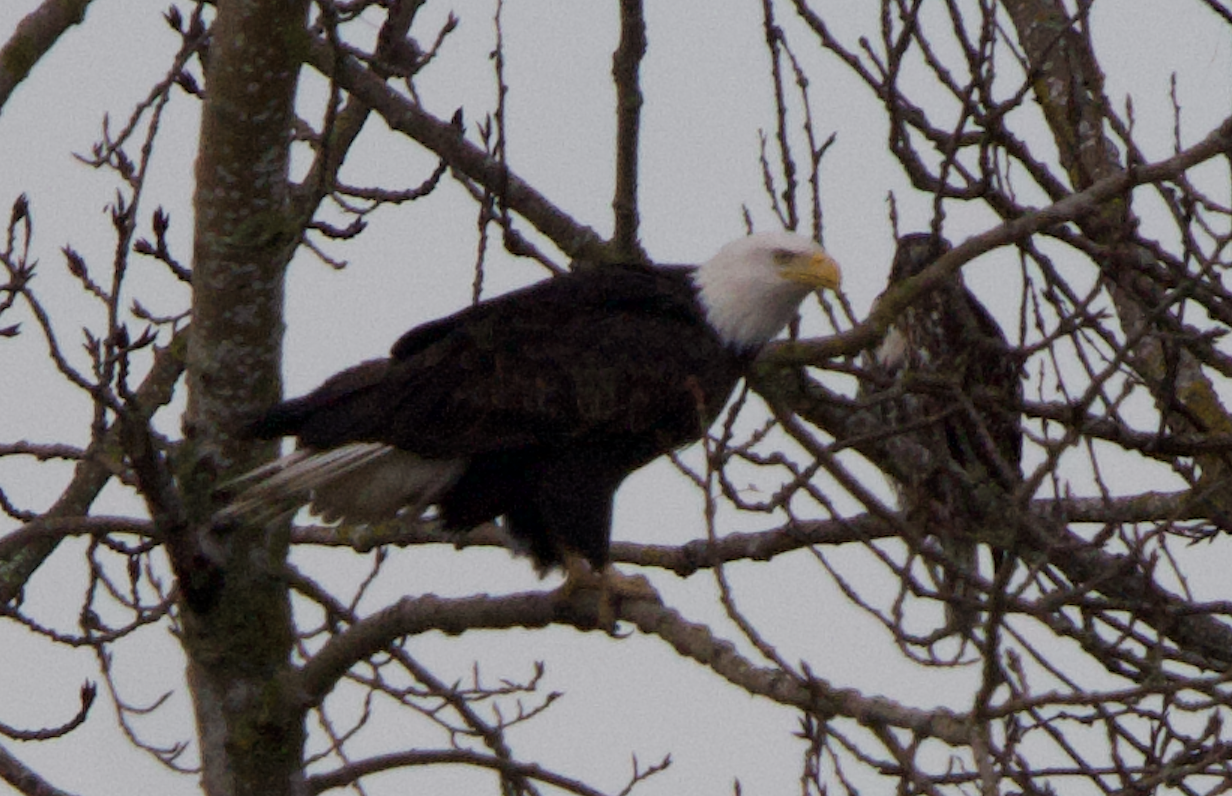
CLICK HERE FOR MORE
Although the bald eagle is often referred to as the King or Master of the Birds because it is an apex predator and can fly higher than other birds can follow, they also chooses its battles and manages the energy it may cost them to chase smaller birds.
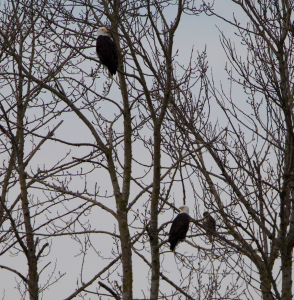
With this bald eagle’s mate in the tree, she may have chosen the perch while the smaller bird, a red-tailed hawk landed lower down. This was not a nesting site and the smaller bird was not challenging the female higher up in the tree, so the male eagle likely intended to warn the smaller bird who’s boss.
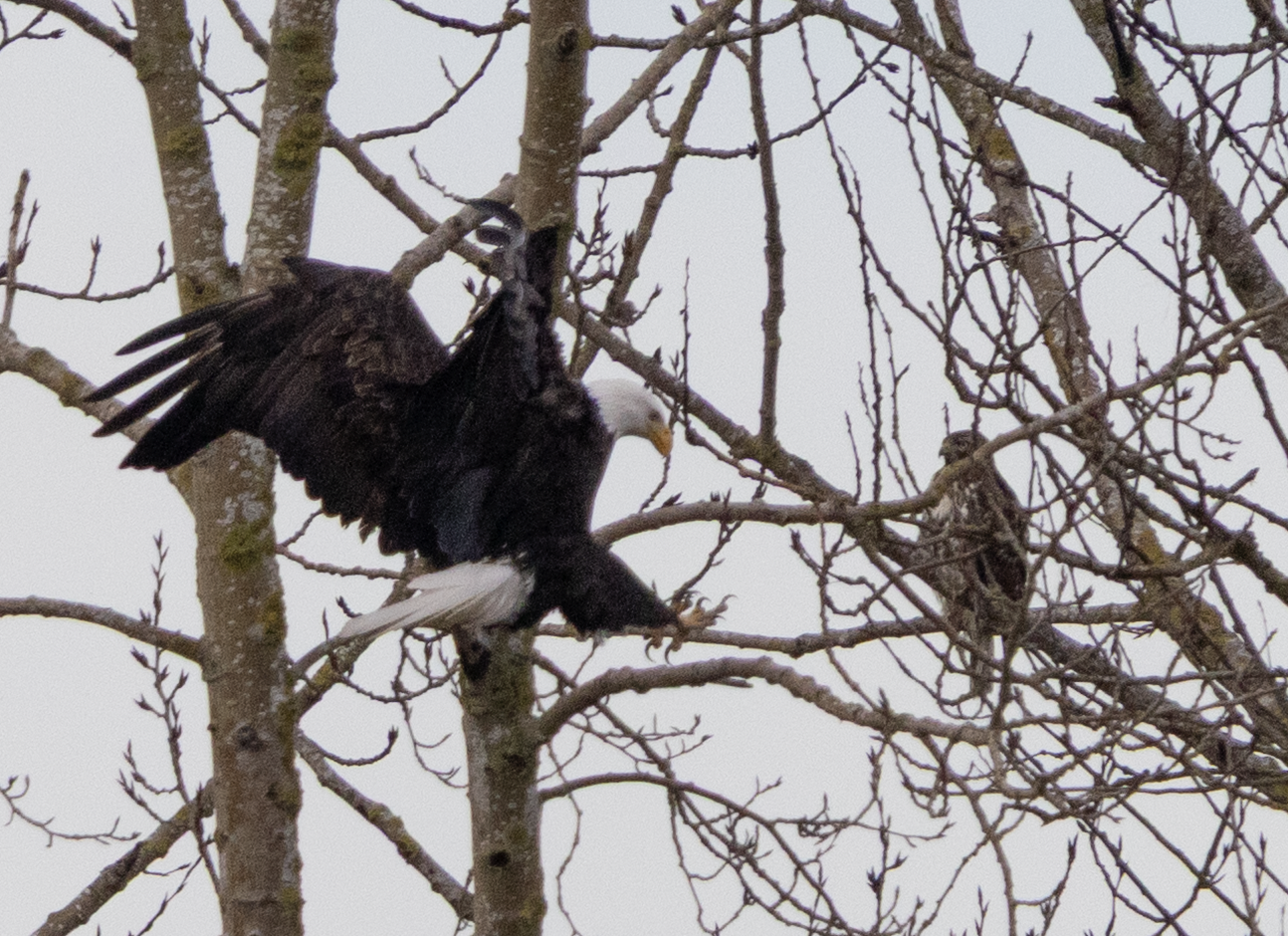
Here’s a zoom in of the photo above:
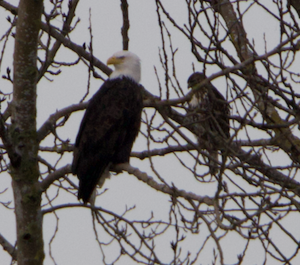
The red-tailed hawk didn’t seem to move because moving quickly could have triggered an predator-prey attack response, and it even looked down, showing deference rather than challenge the eagle.
But the hawk was provoked by flying to a tree where one bald eagle was already perched. It likely was defending its territory because its nest was nearby. Eagles have an advantage over red-tailed hawks in flight because of their open-air speed and strength, but in a perched situation, the red-tailed hawk may be in a stronger position because of its maneuverability and smaller size.
So it does make sense that both wanted the other to know they were in the same area. Eagles tend to hunt more fish and red-tailed hawks more small mammals, so there is no direct competition for food.
Bald eagles have been known to plunder red-tailed hawk nests, but red-tailed hawks have also been noticed to prey on young eaglets, so when these birds come together, there is no love lost between them, but also no commitment to mortal combat.
How do we know the small bird isn’t a juvenile eagle?
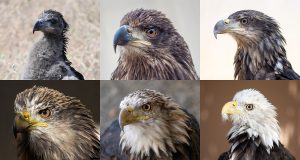
There is wide variation between feather pattern coloring among bald eagles. For example (from Wikimedia):
But the size difference between the two birds, as well as the smaller relative beak size on the smaller bird is the clearest indicator that the smaller bird is a hawk and not juvenile bald eagle. During the brown stages of the juvenile eagle, its size is similar to its parents.